COOPERHATE Holds European Opening Conference in Lisbon
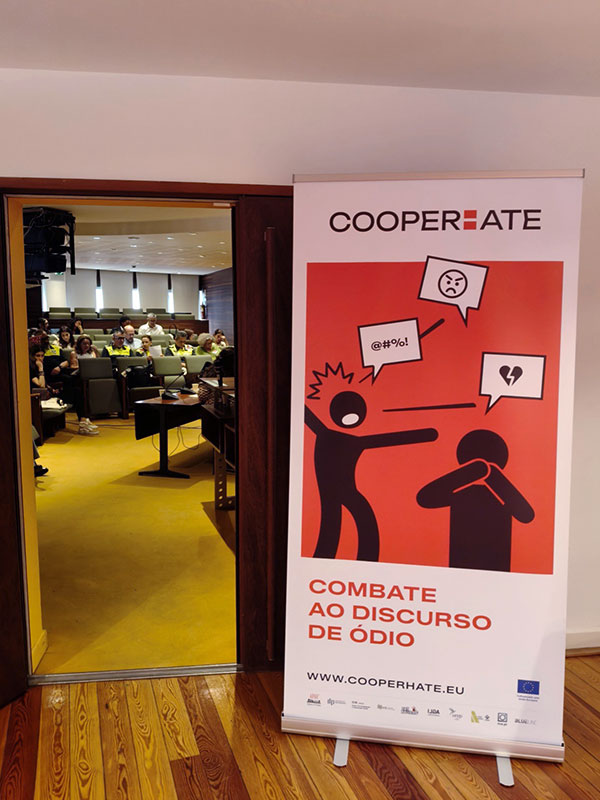
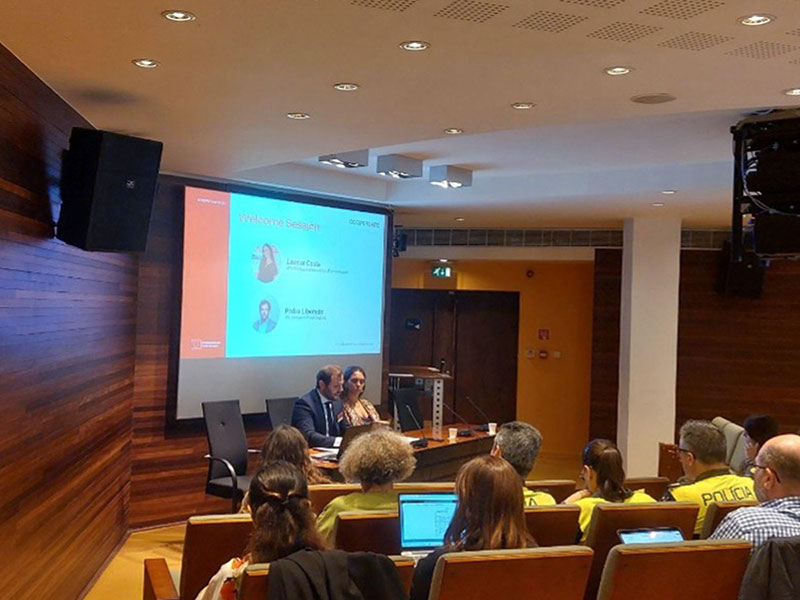
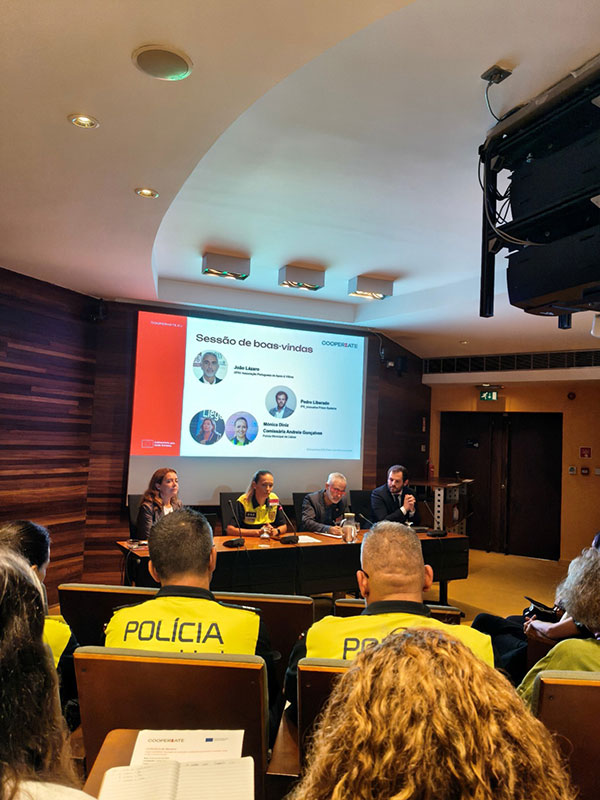
On October 24, 2025, the COOPERHATE project held its European Opening Conference at the Lisbon Urban Information Centre, officially marking the start of the project’s implementation.
Organised by APAV – the Portuguese Association for Victim Support – and IPS_Innovative Prison Systems and the BSAFE Lab of the University of Beira Interior, the event brought together national and European stakeholders to discuss the challenges of preventing and combating hate crimes and hate speech.
The conference took place in two parts. The morning session, dedicated to Portuguese stakeholders, had 59 participants, including representatives from security forces and services, civil society organisations, victim support services, public institutions, religious communities, and research, training, and communication entities. The session provided an overview of the current landscape of hate speech and hate crimes in Brazil, as well as the objectives, activities, and main expected results of COOPERHATE.
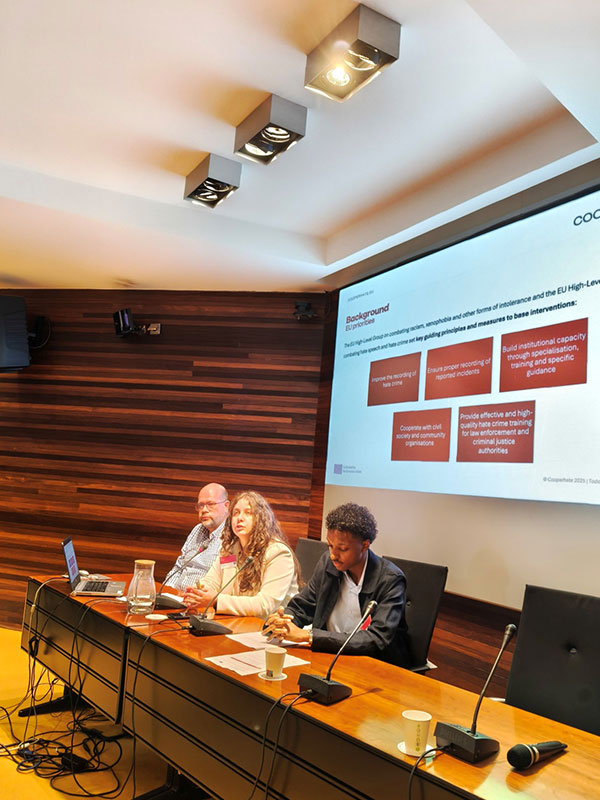
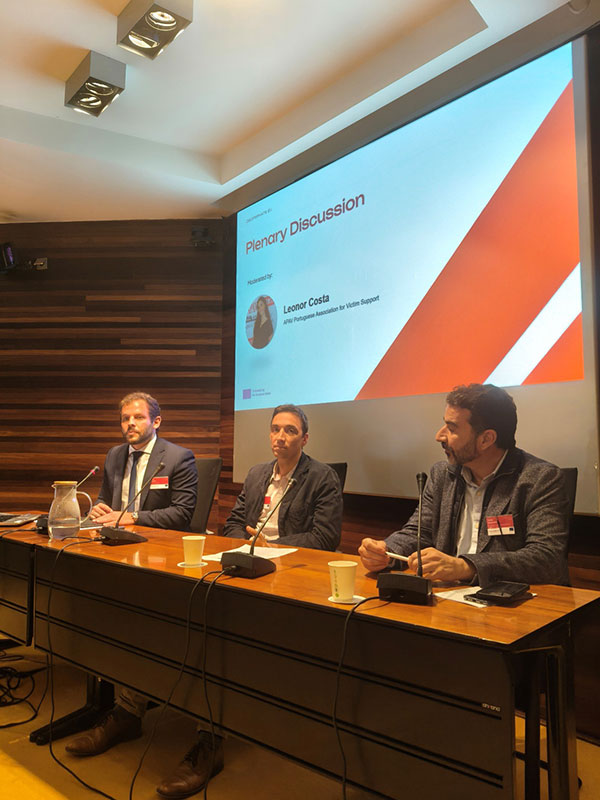
Highlights of the morning included a presentation of the results of the kNOwHATE project by Dr Rita Guerra from CIS-Iscte – University Institute of Lisbon, a presentation of the COOPERHATE project and its main products by the consortium partners, and a round table discussion dedicated to the theme “COOPERHATE Project: Building Bridges and Shaping the Future against Hate in Portugal.” The round table was divided into two thematic sessions: the role of security forces and criminal investigation, and the role of civil society organisations and victim support.
The afternoon session brought together 31 participants, including consortium members, Advisory Board members, and European stakeholders from institutions in the Czech Republic, Greece, Moldova, Serbia, Spain, and Sweden. This session focused on the European dimension of the project, its expected deliverables, and shared challenges at the European level, including online reporting mechanisms, migration, disinformation, victim support, and the potential of AI-powered tools.
Throughout the day, discussions underscored the importance of coordinated responses between institutions, civil society organisations, and communities, as well as the need for victim-centred, culturally sensitive approaches underpinned by reliable data. Participants also highlighted the relevance of tools adaptable to different European contexts, as well as of transnational cooperation, in preventing and combating hate speech.
The European Opening Conference marked an important first step in establishing a common understanding of COOPERHATE’s objectives and in gathering input to inform the development of future tools, training activities, awareness campaigns, and cooperation initiatives planned over the next two years.